Showing posts with label bravery. Show all posts

Thursday, September 24, 2009

Mark My Body For Life: Only $5!

Today I went here:
...to schedule an appontment for Friday, October 16.
Visit Tattoo Me to learn how you can help do just that.

Don't miss this exciting opportunity!!!


(You'll also get a pseudo-preview of my soon-to-be-released new blog site)

Monday, September 21, 2009

"If I Read Your Play, Will You Promise To Stop Writing Them?"

This is my third year reviewing submissions for a playwrights' residency program in NY. Every year I wait excitedly for my packet of plays to arrive in a giant manilla envelope. Then, every year my smile slackens upon reading the first line of the first play, wherein I remember that 4,999 out of every 5,000 un-represented (by agent) play submissions are horrendously un-readable. But I must read on, constrained by my commitment (and paycheck) to read every single word on every single unnecessary page. By play number four I remember why I stopped working in theater Literary departments: You thought retail was soul-killing? Try spending day after day reading people's open-hearted, dream-filled, creative offerings and thinking to yourself, "Sir/Madam, you are entirely deluded in thinking you have a career in play-writing; rarely (actually quite frequently) have I encountered a text so devoid of talent or promise."

It's only slightly less depressing than watching SAG-enforced open auditions.

But in the end, I get a little bit of cash, a little boost to my inner-critic-ego, and a nostalgic (is it truly in the past or just on pause?) return to theatre work.

Here's some quotes from my reviews:
(And no, the playwrights do not read these- just the selection committee- I'm not that mean)

"A flat and tired treatment of an unoriginal narrative, this play fails to be believable in either characterization or action."

"[The] themes fail to take shape either in character interaction or in the language/imagery of the piece. The metaphors appear but never take on meaning."

"This play appears more an exercise in dramatic theory than an expression of creative vision."

"The repetition and gestures that are the primary substance of the play appear only as attempts at avant-garde, rather than embodiment of the dramatic tension. "

"A sentimental and melodramatic story spread thin by too many dramatic questions."

"Hackneyed and derivative ex-lover scenario with tinges of detective drama a-la 'Murder She Wrote'."

Friday, September 18, 2009

"A" is for "AHA!": The Scarlet Letter as Nathaniel Hawthorne's Biggest Inside Joke

The Scarlet Letter (Modern Library Classics) The Scarlet Letter by Nathaniel Hawthorne

My rating: 4 of 5 stars

We all read it in eleventh grade. The language was dense, but we ached for Hester, hated Chillingworth and rooted for Dimmesdale. It all felt so dramatic and deep and dark, like moss on an old oak tree covering up secret messages carved long ago by two star-crossed lovers.

And then you read it as an adult.

Umm...sorry Ms. Vehar, but how did you fail to mention that this books is hilarious? I could practically hear Nathaniel Hawthorne's eyelashes swishing as he winked sarcastically from from behind every page. The faux Puritan prose is just that: faux. While Hawthorne makes grandiose statements about the severity and coldness of those old Puritan days, he is practically bruising the reader with elbow jabs to the ribs saying, "Nudge, nudge, get it? WE ARE JUST AS JUDGMENTAL AND SEVERE TODAY! HA!!"

Despite the mild bruising, I couldn't help but adorn the margins with smiley faces every time I felt my buddy Nathaniel winking at me. But for all the smiley faces, it was a surprise to realize how distant the narrator really stays from the characters. While adaptations of the story focus on the passion of the silenced lovers and imagine a rich thought life for Hester, the book rarely visits the interior worlds of the characters beyond what is symbolically represented by their, well, symbols- her daughter Pearl, the rose bushes, the gallows, meteors, the eponymous scarlet letter, etc. The narrator spends far more time alluding to foreboding symbolic omens of psychological disruption, than inviting the reader to feel what the characters feel, or even know what they are feeling. This book is anything but romantic.

Further, Dimmesdale is in no way a hero to root for. From my reading, Hawthone thinks him the worst kind of cowardly narcissist there is. For all of Dimmesdale's self-imposed chastisement and loathing, he goes about his life feeling rather proud of his status as secret horrible sinner, whereas Hester bears the public shame and maintains her integrity. Dimmesdale's death (oops, spoiler) is his final pathetic act of grandiosity- he begs for Hester to give him her strength, but still chooses the easy way out as a martyr for his own sinfulness. He avoids the real risk, following Hester into a life beyond Salem's black & white punitive moral justice. He disintegrates into the non-person he is, rather than choosing to live honestly as an imperfect man.

I enjoyed my revisit to The Scarlet Letter, especially considering it had been twelve years since I'd read it. It's a short read, and if you can read it as satire, not morose allegory, it really shines with brilliant psychological insights. And no matter how unlikable I found her to be, Hester really is an amazing female character. Hawthorne supposedly based her largely on Margaret Fuller, a woman whom nearly all those transcendentalist fellows were head over heals for. She marched to her own drum, choosing lovers often over marriage, and career over domestic security. It must have been pretty shocking in 1850 to read about the choices Hester Prynne makes, and I bet a lot of Hawthorne's ironical winks and nudges would not have been as humorous if you were the party being implicated. But for 2009, it's an enlightening and entertaining read.


View all my reviews >>

Thursday, September 17, 2009

Like Muriel Rukeyser's poem...

...which asks,

"What would happen if one woman told the truth about her life? The world would split open,"

this video exemplifies my belief which posits,

"What would happen if one guy danced with all his might?
The world would come running."


I think its as important for men to feel free to dance as it is for women to feel free to speak. Say no to shame, yes to freedom, (and boogie).

Thursday, August 27, 2009

"Dear Spinal Cord Meningocele Oversized Thecal Sac..."

Little more than a month ago, Maryann received some life-altering news about her body. Even more life-altering in the sense that she learned about something that had been there all her life, and in having never made itself known, was only life-altering once it was recognized. She could have gone her whole life without ever knowing it was there.

Her journey though shock, surrender, denial, rage, despair and survival has been perseveringly, vulnerably, hilariously, passionately and heartbreakingly recorded on her blog. There's still so much about which she's waiting for answers, not the least of which being when will she finally have surgery, but my heart has been soaring along with her ability to process and feel such highs and lows in the midst of complete and utter "WTF?!".


Her most recent post, felt like such a tender and brave step towards both accepting the reality of what she's learned, and asserting her own anger and hope at the same time. I have so much respect for her. I wanted to share with others this amazing letter she wrote to part of her body. Just reading her words makes my own heart feel 20 times more brave.

Thank you for sharing with us Maryann. You astound me.

(And don't even get me started on how this woman dances)

Monday, August 24, 2009

Self-Referential Haiku

Jeremy said I
write such sad haiku. Okay
if that made me smile?

Sunday, August 23, 2009

I Hope You're Right, Nathaniel Hawthorne.

"It is to the credit of human nature, that, except where its selfishness is brought into play, it loves more readily than it hates. Hatred, by a gradual and quiet process, will even be transformed to love, unless the change be impeded by a continually new irritation of the original feeling of hostility."

-Nathaniel Hawthorne, The Scarlet Letter

Finally feeling like that "gradual and quiet process" might be able to start.

Friday, August 14, 2009

My Horoscope Today

"...don't be so quick to negate your desires for the sake of the community."


It's like they know I'm a woman or something.

Wednesday, July 29, 2009

Alfonso Cuarón, Harry Potter and the Etymology of Sonship

In the days loking forward to Harry Potter Film #6 (which, by the way I absolutley loved: it's the Harry Potter film Robert Altman would have made if he'd ever made one- driven by relationships and naturalistic moments rather then heavy plot- and the dialogue and acting felt so much more spontaneous and honest- in some ways in was the least "movie" of the movies and really felt more like Gosford Park than Chamber of Secrets- a good direction in my opinion), I spent time reflecting on why I love these movies so much. (With the exception of Goblet of Fire which I find to be inane and dishonest in its characterization and storytelling).

I always come back to Prisoner of Azkaban, which I consider one of my top ten films ever. I love it that much, and respect it that much (and have seen it at least 12 times). Most of the reasons I love it all come back to the fact that Alfonso Cuarón transformed Chris Columbus' fantasy kids movies into art. It's not the first time Cuarón took on a potentially insipid kids box office draw and arrayed it with subtlety, aesthetic depth and integrity. His version of Frances Hodgsen Burnett's "A Little Princess" that came out in 1995, though seemingly sappy from the previews, was a tender and passionate story of love and compassion, told from a daughter's perspective. (Also, to either its strength or detriment, its from his Green period, like Great Expectations- does every scene need 23 green accents in the room?).

Like "A Little Princess", "Harry Potter and the Prisoner of Azkaban" is about being orphaned and being fathered, and the more I think about it, that seems to be the story Cuaron tends to tell. The theme of fatherhood or needing a father pops up continually in his work, whether its his short segment in Paris, je t'aime or the aptly tiitled Children of Men. Cuaron continually evokes in viewers questions and feelings around what its like to live without the protection of a father, and the ache that brings.

This is what makes the 3rd Harry Potter film so resoundingly powerful for me. There's no Voldemort, no Death Eater crap, just the story of Harry being fathered by at least four men who value him in different ways, and the impact that has on Harry's ability to know himself better. Dumbledore, Sirius Black, Professor Lupin, Hagrid and Mr. Weasley as well, all speak into Harry's life in guiding ways that both respect Harry's feelings and what he's been through, but also in ways that want to protect his childhood and not thrust him unnecessarily into responsibilities that should belong to them as adults, not a thirteen year old kid. There are also strong mothering characters as well, with Mrs. Weasley's fierce-some tenderness and Professor McGonagal's watchfulness and strength.

What is most powerful is the symbolism of the patronus charm. While we see Harry being truly seen and loved by a diversity of strong men and women, we see how they help him see himself apart from the abuse he was raised under, and step more into his own strength. When Harry is saved by the patronus charm on the lake where Sirius in being attacked by dementors, he believes its his somehow his father, back from the dead. The audience sees a white stag. In the books, we learn that the stag is the same animal that James Potter turned into as an animagus. Both we and Harry later realize that Harry is actually the one who sent the patronus. In the moment when he realizes his father is not going to appear to save Sirius (and himself in a time-traveling complexity), he finally, instinctually steps forth with his wand and shouts "Expecto Patronum!" and a beautful eruption of light beams resound out, almost like sound waves, rocketing through the trees and casting out the dementors.

Here is the one instance where J.K. Rowling's silly puddy approach to new etymological creations actually has depth. Patron, is Latin for protector, and comes from pater, meaning father. To produce the charm, Harry pulls from his deepest memory of happiness then shouts "Expecto Patronum" - "I Expect My Father!" which is both literally true because he thought his father sent the patronus, but also feels like a cry of his heart saying "I deserve a father, I expect protection, i believe I will be fathered still." And if you take the word "expect" a little father to its use in the word expectorate- meant for coughing/spitting but able to mean "to send out from the chest", Harry is also saying "From myself I send out a protector", which is exactly what happens as he sends out his patronus deer to defend himself and his godfather Sirius.

In this haunting and heart-expanding moment of the film, Harry both waits for the protection of the father he knows he truly belongs to and also acts as his own prtoector out of love for the godfather who has just come into his his life. In believing that he is worthy to be fathered, Harry is able to father himself. Soon after, Harry tells Hermione, "It wasn't my dad I saw earlier. It was... me. I saw myself conjuring the Patronus before. I knew I could do it this time, because...because I'd already done it. Does that make sense?" Yes it does make sense. Harry could save himself because in "Expecting his Father" he also found the strength to "Expect/Send himself".

I can't help but find spiritual meaning in this scene. The "I Expect My Father" feels like a prayer for protection even as it claims and achieves that very protection. The expecting of a father can only come when one feels named as a son/daughter. Harry's most powerful display of magical strength comes in the moment when he feels most like a son- both a son to Sirius who will die if Harry doesn't save him, and a son to the parents who loved him and were killed before he could love them back. It's love that makes the patronus charm work, and that love is rooted in the identity of knowing he was loved by those who father/mothered him and who sacrificed in order to protect him. Harry's mother gave her life to save him, and her love literally entered his skin and marked him for life. I believe this moment in Prisoner of Azkaban, the sending of the powerful patronus against the dementors, is when Harry ceases to be an orphan and truly knows himself to be loved, worthy of being loved, and truly able to love others. I want to cry every time I see it.

Saturday, July 25, 2009

Reading Annie Rogers Again

A Shining Affliction: A Story of Harm and Healing in Psychotherapy A Shining Affliction: A Story of Harm and Healing in Psychotherapy by Annie G. Rogers


My rating: 4 of 5 stars


"What you fear most has already happened."

“Are you wondering, Annie, how someone who doesn’t see you, really doesn’t recognize you, could possibly say goodbye to you?”

“When you feel you know the future, you can be sure that you are reliving the past...because nobody knows the future.”

“I could not afford to respond truthfully to them, to show them anything real about their effect on me.”

“In each moment in every life, there is a gesture hovering, to move toward or away from a truth.”

“If you fulfilled their wishes and died, then maybe they could love you.”

“I’d actually feel like a child for a moment or so.”

“This child could already foretell the future through the past.”

“What has been wounded in relationship must be, after all, healed in relationship.”


View all my reviews >>

Monday, July 20, 2009

Well Done, Jimmy Carter

After sixty years, Jimmy Carter has severed his ties with the Southern Baptist Convention, finally, over issues of women's subjugation. While I kind of want to pump my fist in the air and say "Fuck YEAH!!!!"... what I really (want to) hope for is that hearts and minds will be opened to realize the folly of equating gender with spiritual capability, leadership or value, not to mention, the Image of God. May Jimmy Carter's integrity in this act serve not to help others jump ship, but to alter paradigms and ignite repentance regarding the violence (spiritual, emotional, physical, social, psychological) that has been done to women in the name of Jesus. That is not the Gospel.

Tuesday, June 2, 2009

A Day I Have Dreamed of Since 6th Grade...


Has Happened.

Erin Blakemore, my soulmate in all things literary since puberty, is being published!

I don't know if I could be more excited if it was me being published.

Erin has always been an author, so nothing feels more natural than that the world should know it, (and pay her for it).


Here's the publishing announcement of her book deal.
Not hard to see where our hearts are aligned, yes?

Erin, I Love you and am so proud, happy, excited, anticipatory, humbled, impressed, crazy-freaking-joyeous. I cannot wait to curl up with your beautiful words about the women (fictional and actual) that have shaped us. You are a true heroine!

Thursday, April 9, 2009

Honesty as Challenge, Honesty as Gift

Undergoing God: Dispatches from the Scene of a Break-in Undergoing God: Dispatches from the Scene of a Break-in by James Alison


My review


rating: 5 of 5 stars

You know it's a good sign when you find yourself recommending a book to five people in a week, and you haven't even finished reading it. This is what happened to me with James Alison's compelling, surprising and gallant theological study into issues of atonement and spiritual/relational honesty. In both parts I and II of the book, Alison explores the grace that occurs when someone willingly enters the place of shame so someone else does not have to. Alison defines as honesty as distinct from sincerity or “holding fast to the truth”, in that honesty should be “something of which we are so massively the recipients that we can’t really be its brandishers as if it were our own” (180). Coming from a gay Catholic priest, Alison's message of power-relinquishment and humility/openness in the face of disingenuousness and oppression by the larger Christian community, is astonishing, gut-wrenching and redeeming. This book is as much confession as it is plea, and as such, creates the very space for difference and diversity that Alison humbly and yearningly asks of from the Church. It is a beautiful plea, and daringly honest confession.

"...the search for reconciliation becomes something enflamed by other fires. Something rather like a deep unconcern about myself is born, and a desire to be reconciled with the other because I know that both he and I will be much more...if we are reconciled. That is to say, triumph for me passes through his being made whole and not his diminishment." 117-118.

View all my reviews.

Monday, February 2, 2009

Bread that Breaks You Right Back

Take This Bread: A Radical Conversion Take This Bread: A Radical Conversion by Sara Miles

My review


rating: 5 of 5 stars

The subtitle of Sara Miles' spiritual memoir is "a Radical Conversion" and those two words, along with the amazingly entrancing and appetizing peanut butter and jelly sandwich with a cross marked through it that occupies the book cover, pretty much say everything there is to say about this profound and utterly simple book. Miles' story is Radical because she is radical, but also because her revelation is so entirely basic. She's drawn into Christian faith through food- the most basic sustaining force for humanity other than blood and air I guess. And her Conversion converted me, over and over, because it wasn't about her becoming someone new, different, more- it was about becoming less, giving up what got in the way of what she understood as the Gospel: "feed my sheep".

This leftist lesbian journalist with a passion for kitchens and Latin American liberation has written the truest account of what Christian life is and should be, that I have ever read- the gospel according to Sara Miles sounds more like Jesus than anything I've yet to encounter- seriously. (Okay, so maybe not including the Bible, but frankly, she gives the Book of John some serious competition). So my statements sound hyperbolic, but I am not trying to be. This book will disrupt your comfort level no matter how liberal or conservative you are. The call is clear- communion means unity because of difference, not in-spite of it, and the primal gift of sharing food with one another may be the most visual and potent expression of love on the planet.

Yep- this book- I liked.

View all my reviews.

Sunday, January 18, 2009

Meditations in Elvish: What Happens After Becoming a Savior

My first act of 2009 was a 12 hour Lord of the Rings Marathon with a swell crew gathered by Jamie, who even had her mom, the incomporable Jody Spiro, make PO-TAY-TOE soup a la Samwise Gamgee. So the right way to start a year.

As all good art should, Lord of the Rings reads/watches me as much as I watch it. The story it most often tells has to do with my friendships (my Sam knows who they are) and the places and people with whom I've watched the films (6 different states for the theatrical releases). But this time, what stuck out to me was the theme of how characters who wield Hope against seemingly impossible odds, end up acheiving that hope for others, but not for themselves.

The first moment that struck me is in Return of the King, where Elrond, having reforged the shards of Narsil, presents Aragorn with the sword that will compel certain traitors to fulfill their broken oaths. Using the sword is (in the films at least) Aragorn's first real moment claiming his role and identity as the heir to the throne of Gondor. Wielding the sword, he steps fully into his authority as the almost-crowned King. But in the handing of the sowrd, Elrond and Aragorn exchange a shared phrase (in Elvish)

ELROND: Ónen i-Estel Edain. (I give hope to Men).
ARAGORN : Ú-chebin estel anim. (I keep none for myself.)This potent text rings true at many levels. Elrond gives Aragorn hope and the tool to help acheive the hope, but he himself knows his time in Middle Earth is essentially over. Aragorn steps into a role as a symbol of Hope for Middle Earth, but relinquishes the life he has been living, and also undertakes a task that will likely kill him.

The further significance of the phrase is that its the final words of Aragorn's mother Gilraen. Wikipedia exegetes her phrase (from Appendix A of the books) as "meaning 'I gave Hope (an obvious reference to her son's childhood epithet Estel, meaning "hope") to the Dúnedain." The mother of the saving hope of Middle Earth will not live to see him crowned and Evil defeated. The Mary connection here is hard to ignore. Though Mary was present at Christ's crucifixion, we still learn in her narrative that her miracle son leaves her to fulfill his destiny. She gives hope to the world by not keeping him for herself.

However, the most haunting moment of the whole trilogy for me is when the four hobbits have returned to the Shire and are at the Green Dragon about to enjoy some half pints. But their mutual toast is silent, their eyes communicating a mixture of relief, bewilderment, gravitas and grief. They know their home will never be the same to them, because they will never be the same. This is made most true for Frodo, who tells Sam at the Grey Havens when it becomes clear that he is leaving with the Elves, "We set out to save the Shire, Sam and it has been saved - but not for me." Frodo has been marked permanently to the point that he cannot return to where and what was before, but must move forward. Essentially, he cannot belong to the thing he gave his life for, because the giving itself took his life.

At MHGS, we talk often about being prophet/ priest/ king, (categories worked out from King David). You have the truth speaker, the memory keeper, and the peace maker. As I thought about LOTR this time, I was struck that neither prophet, priest nor monarch get to exist much within the community they serve; whether its the Queen in her castle, the priest in the temple or the prophet wearing rags and screaming outside the city wall. In "saving" others, what of the salvation do they experience?

I want to be careful here not to sound like I'm saying that leaders (I abhor the word) can or should hover above the community they serve, or that prophetic risk takers/fighters don't carry hope with them as they offer it to others, but that there is definitely something to the idea that doing this comes with a cost; being so marked by the journey that you can only watch others enjoy what you have fought to protect. You yourself, can only ponder the experience of the transformation and try to live in the wake of such profound darkness and victorious light.

Makes me wonder if the disciples felt much like Sam, Merry and Pippin as they watched their Resurrected Rabbi ascend beyond them with the parting words "I am with you always, to the end of the age." And did these words come from Jesus with as much tenderness tempered by finality as did Frodo's benedicting kiss on Sam's forehead?

I give hope to men. I keep none for myself.

"I am with you always," but I must leave.

Can you ever really return from Mordor? From Golgotha?

Tuesday, January 13, 2009

Blessed are the Independent Filmmakers, For They Shall Remind Us What "Human" Means

A professor included me in an email question they had regarding assigning the film Magnolia as a cultural interpretation of the Beatitudes in Matthew 5's Sermon on the Mount for a class on Biblical interpretation practices. The instructor has used the film for a number of years, but had reason now to wonder if it was outdated, too offensive, or just not the best option out there. I found as I responded, that I both really wanted to protect the film from being called offensive (the instructor wasn't calling it that but was aware of how it has been received by some- I also know it as one of the few films my parents ever walked out on). I certainly made some assumptions as I wrote about what people might find offensive, and tried to make a strong and contextual defensive case (pressing my point a bit harder than PT Anderson probably would), but I also tried to hold some space to say maybe its okay for people to be offended. I think I too easily mark "being offended" as a sin of close-mindedness, which is an incomplete assumption. So I liked where my email response took me, and am posting it here.

Thanks for including me in the question

I think one thing that’s hard regarding art is understanding the difference between offensive characters and offensive content. We are supposed to recognize TJ Mackey’s grossness, not align with it- the filmmaker wants the audience to be repelled by Mackey and thus long for his reconciliation and redemption- not for us all to be more like him.

But all of us have our exposure limits- where seeing certain things hurt our soul no matter how it is intended- (I can’t watch mob violence- but sword fights and war scenes don’t bother me)

So it may just need contextualization- and as I think you’ve done in the past, an option not to watch it maybe-

But perhaps a good way to speak of the film is that it (like many Independent films as opposed to Hollywood studio films) deals with depravity as a means to explore longing. So if we only see “oh- so much depravity” we may be missing the story that’s actually being told.

As a caveat, I would suggest mentioning that the language and imagery is harsh and often highly sexual, and people may want to decide for themselves what they want to be exposed to- but without telling people how to feel about the film (I don’t want to patronize people into feeling that if they don’t like it that there is something sheltered or limited about them- though it’s easy to be passionate about something you love when other people deem it yucky) it may help to remind people that with a film like Magnolia, we are meant more to follow the Characters, than we are to follow the Plot- it’s in the characters that we experience narrative arcs, more so than in the plot narratives. Might make it easier for people to put up with the graphic elements if it’s in context of what people are dealing with, rather than as gratuitous exposure to ugly things.
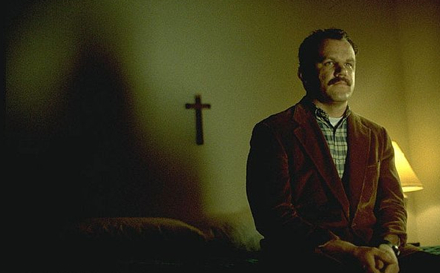
That’s what your question brought up for me- not sure if it’s helpful at this point. I love that you use Magnolia- helped me fall in love with a movie that I had only cursorily noticed before hand.

Saturday, January 10, 2009

Moving From Comics Right Into Illustrated Novels

Blankets Blankets by Craig Thompson


My review


rating: 4 of 5 stars

A beautiful and honest story, full of snow.

It feels disquietingly similar to the high school and childhood life I saw happening around me, and often, reeks abundantly with my own past. You will recognize yourself in this book, and will often feel sad but will also laugh uncomfortably and self-righteously at times. Indeed, I think if you were born between 1975 and 1985, it will be hard not to have your jaw drop at times at how Thompson has remembered your past better than you do. There is deep loveliness in this, and deep sorrow as well.

I finished it in one sitting. I recommend the same to all who pick it up.

View all my reviews.


Thanks for handing it to me Tucker. We shall discuss.

Thursday, January 8, 2009

Haiku for a Friend's Heart

I'm so sorry for
what's been taken from you. I
pray that it returns.

Tuesday, November 25, 2008

Haiku for a Friend

Hope is believing
your desire isn't dumb
even when it hurts
