Showing posts with label quotes. Show all posts

Tuesday, October 27, 2009

Can I Just Clarify One Thing Real Quickly Here?

"...one of the problems with women taking full leadership is that it inevitably involves a collapsing of the distinctions between the sexes."

--Thomas R. Schreiner in his conluding statements about contemporary application of 1 Corinthians 11:2-16, in Recovering Biblical Manhood and Womanhood: A Response to Evangelical Feminism, edited by J. Piper and W. Grudem. Wheaton: Crossway, 1991.


It's probably irresponsible or lazy for me to just throw this quote out here without offering an in-depth response or critique, but as I sit here reading this text, researching "Male-Headship" readings of 1 Corinthians, I just want to go on record to say that as women continue to take on full leadership roles both in church and society, it will highlight the distinctions between the sexes, not collapse them. That's the whole point, from my perspective. I want women in leadership because they will lead as women, not lead as men. Only then can we experience a reframing/healing/redesign of what we have only been offered from male paradigms.

An egalitarian society does not equal an un-gendered society.


That's all I have to say for now, Messieurs Piper and Grudem.

Thursday, October 8, 2009

Mama Wants A Time Machine

Blaine has been collecting 100 Words from various folk and topics (presumably) connected to them. He gave me "Reading". There's a lot I would want to say about reading, and have previously given 100 words to Story for Joshua. But I went with the first thing I tend to think of with reading, and of course, it's about how much I want a time machine. Here's my 100 Words.

Thanks Blaine.

Thursday, September 17, 2009

Like Muriel Rukeyser's poem...

...which asks,

"What would happen if one woman told the truth about her life? The world would split open,"

this video exemplifies my belief which posits,

"What would happen if one guy danced with all his might?
The world would come running."


I think its as important for men to feel free to dance as it is for women to feel free to speak. Say no to shame, yes to freedom, (and boogie).

Monday, September 14, 2009

Dialogical Film Club: Part 1, Wherein 6 adults spend 4 hours watching "Twilight"

In late April 2009, I was at a local pub surrounded by friends who had just graduated (leaving me behind to complete my 4 year degree sans all my 3rd year degree friends). Three of us started discussing the recent Twilight film: who'd seen it, who hadn't, and why. Within about 20 minutes a spontaneous group of six had formed, deciding that we needed to watch Twilight together so we could talk through it and by doing so, perhaps survive it. Knowing that if we didn't pick a date right then, that it would never happen, we decided on a Monday three weeks in the future.

Setting the date so far ahead brought a certain formality and sense of expectation to the movie watching night. 3 weeks away meant the need for email reminders, confirmation emails, plans about food and drink, and how we would obtain a copy of Twlight. It was in one of these emails that I celebratorily, yet causaully, referred to us as the "Dialogical Film Club". Dialogical, because we would be dialoguing through the movie; pressing pause whenever someone had an observation or question. This is how I always watch movies, but the group setting formalized it. The body of the email read:

"We six shall gather to experience the glory and depravity that is the film 'Twilight" We will lose ourselves, find ourselves, hit the pause button and work out the sado-masochism and erotic violence that is the film Twilight. It will be transcendent. We will giggle and so "oh my gosh" a lot."

And we did. We spent four hours watching a two hour movie. It was incredible In fact, it was because of this friend-movie-gathering, that I arrived at my Integrative Thesis Project topic for the next academic year. One of our main take-aways from the film had to do with the portrayal of male protector and silenced woman. It was also the DFC (as we have now come to know ourselves) who first began referencing similarites of the narrative's ethos to the complementatian values of New Calvinism. Then, during a phone conversation the following Thursday (Stacy had told Kim George about our Twilight night, then Kim called me with some Twilight questions for a course she was teaching on sexual violence in the media) it all coalesced in my brain and I said (outloud to Kim) "I think this is what I'm going to spend the next year working on."

So besides coming up with a thesis topic (which, by the way, is tentatively titled "Why are you apologizing for bleeding?": Twilight, New Calvinism and the Evangelical Embrace of Sadomasochistic Narrative) that Monday spawned a whole summer of marvelous Mondays. This happened because Jeremy said we should do it again, then Holly said "How about in four weeks?" and it was settled. Jeremy also proposed that following our first offering, it would be interesting to choose films that are hugely popular for some reason, and watch them to discuss the cultural trends/values/beliefs being consumed/propagated.

We liked that idea. To be continued...

Thursday, September 10, 2009

Reading the Worst the Bible Has to Offer

Texts of Terror: Literary-Feminist Readings of Biblical Narratives (Overtures to Biblical Theology) Texts of Terror: Literary-Feminist Readings of Biblical Narratives by Phyllis Trible


My rating: 4 of 5 stars


While Trible's literary/rhetorical criticism asks a lot of an ancient, multi-sourced text, the endeavor is still humbling in scope and purpose. Published over 25 years ago now, Texts of Terror is still a shining example of feminist Biblical criticism, as well a work of deep faith, hope and compassion. Trible takes four of the most disturbing Biblical examples of sexual violence against women and exegetes them with a Christological lens. Buried under the violence, subjugation and silencing, Trible unearths the following women:

Hagar: Egyptian Slave Woman
She was wounded for our transgressions; she was bruised for our iniquities
Genesis 16;1-16; 21:9-21

Tamar: Princess of Judah
A woman of sorrows and acquainted with grief
2 Samuel 13:1-22

An Unnamed Woman: Concubine from Bethlehem
Her body was broken and given to many
Judges 19:1-30

The Daughter of Jephthah: Virgin in Gilead
My God, my God, why hast thou forsaken her?
Judges 11:29-40

By reading these texts closely and attending to the subject/object of grammar and the often chiasmic nature of the syntax, Trible finds the people and poetry under the stories, and through them, a glimpse of redemption for these texts of terror as they reveal the brokenness of human violence paired with solidarity in Christ's suffering and sacrifice.

View all my reviews >>

Sunday, August 23, 2009

I Hope You're Right, Nathaniel Hawthorne.

"It is to the credit of human nature, that, except where its selfishness is brought into play, it loves more readily than it hates. Hatred, by a gradual and quiet process, will even be transformed to love, unless the change be impeded by a continually new irritation of the original feeling of hostility."

-Nathaniel Hawthorne, The Scarlet Letter

Finally feeling like that "gradual and quiet process" might be able to start.

Friday, August 14, 2009

My Horoscope Today

"...don't be so quick to negate your desires for the sake of the community."


It's like they know I'm a woman or something.

Sunday, August 2, 2009

"We will never know how the mind turns the water of our cells into the wine of consciousness"

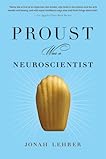
Proust Was a Neuroscientist Proust Was a Neuroscientist by Jonah Lehrer


My rating: 3 of 5 stars

I was drawn to Jonah Lehrer's book when I saw a light blue paperback with a madeleine cookie on the cover along with the word "neuroscientist". Tasty looking indeed. When I opened it up, I saw that an entire chapter was devoted to George Eliot and "The Biology of Freedom". With little more info than that, I basically took the book to the cash register and had at it.

To quote the description on the back, Lehrer's book explores the idea that "when it comes to understanding the brain, art got there first." Each chapter profiles a 19th-early 20th century artist and how their work revealed an understanding of how our brains function that neuroscience is only just beginning to discover. Most engaging was the chapter on chef Auguste Escoffier and the intuiting of umami- our only very recently canonized new taste- joining savory, sweet and the rest. The chapter on Stravinsky and how our brains learn to enjoy music was also refreshing.

Overall, however, I find I was most alert while Lehrer profiled the artists, particularly as he located them within the scientific atmosphere of their time. Once each chapter switched to descriptions of neurological functioning the writing became dense and hard to connect with. Maybe there's just no easy way to write about neuroscience no matter how many literary references one uses. Lehrer's effort is much appreciated, but still feels only mildly successful. I loved learning about the relationships (or animosities) these artists had to the scientific communities of their era, but the connection to what their art revealed about what we now know of the brain still felt like a bit of a reach. But still interesting. Ultimately, I love Lehrer's goal of fostering dialogue and mutual understanding between science and art.

"We now know enough to know that we will never know everything. That is why we need art: it teaches us how to live with mystery. Only the artist can explore the ineffable without offering us an answer, for sometimes there is no answer...When we venture beyond the edge of our knowledge, all we have is art."

Beautiful.

View all my reviews >>

Saturday, August 1, 2009

Why Publish When You Can Just Twitter?

What's all that tweeting you hear? Oh, just the sounds of my fifteen minutes of fame getting used up. I'm not complaining. The following is proof that Twitter truly is the most powerful benevolent de-centralized (human-made) force in the universe.
It goes like this...

In August, Ian and I start working on a paper about Joss Whedon's series Firefly, to submit to the Whedon panel at the Southwest/Texas American & Popular Culture Association's Annual Conference. Then we write it. Then we go to the conference. We have a great time, we email the paper to a couple people we meet there. We talk about editing it so we can submit it for publication somewhere like the Journal of Religion and Popular Culture. But the re-formatting alone would take major thought, and Kj's still only halfway through a crazy spring term. So we hold onto the paper with an ellipses as to what to do with it next.But in July (last Monday to be exact), we re-deliver our paper presentation along with a film screening at MHGS. Josué suggests we include a write up about the event for the new Experience MHGS website. He goes ahead and makes a paper link in case someone wants to read it. I think, "That's awfully nice, but who that's investigating MHGS is gonna read a 35 page paper about fundamentalism and a cancelled TV show?"

But I go ahead and tweet the link to the EMHGS site.
Then this happens. My initial tweet is way down there on the bottom, then next thing you know, It's on Whedonesque, the ultimate Whedonverse hub for both fandom and academia. So within a few hours, it went from living in my docs file to being accessible to every hardcore Whedon fan on the planet. By the time I got out of bed, it already had a comment stream 30 posts long.

So no more wondering who our audience is for this thing. It's out there. They're reading it, and they're already debating everything from the specifics of taking holy orders, to mind-reading to biblical innerancy, (not to mention finding all our typos).

Oh mighty Twitter. Thanks for getting us out there. You put a skip in my step all day. Tweet tweet tweet.

Wednesday, July 29, 2009

Alfonso Cuarón, Harry Potter and the Etymology of Sonship

In the days loking forward to Harry Potter Film #6 (which, by the way I absolutley loved: it's the Harry Potter film Robert Altman would have made if he'd ever made one- driven by relationships and naturalistic moments rather then heavy plot- and the dialogue and acting felt so much more spontaneous and honest- in some ways in was the least "movie" of the movies and really felt more like Gosford Park than Chamber of Secrets- a good direction in my opinion), I spent time reflecting on why I love these movies so much. (With the exception of Goblet of Fire which I find to be inane and dishonest in its characterization and storytelling).

I always come back to Prisoner of Azkaban, which I consider one of my top ten films ever. I love it that much, and respect it that much (and have seen it at least 12 times). Most of the reasons I love it all come back to the fact that Alfonso Cuarón transformed Chris Columbus' fantasy kids movies into art. It's not the first time Cuarón took on a potentially insipid kids box office draw and arrayed it with subtlety, aesthetic depth and integrity. His version of Frances Hodgsen Burnett's "A Little Princess" that came out in 1995, though seemingly sappy from the previews, was a tender and passionate story of love and compassion, told from a daughter's perspective. (Also, to either its strength or detriment, its from his Green period, like Great Expectations- does every scene need 23 green accents in the room?).

Like "A Little Princess", "Harry Potter and the Prisoner of Azkaban" is about being orphaned and being fathered, and the more I think about it, that seems to be the story Cuaron tends to tell. The theme of fatherhood or needing a father pops up continually in his work, whether its his short segment in Paris, je t'aime or the aptly tiitled Children of Men. Cuaron continually evokes in viewers questions and feelings around what its like to live without the protection of a father, and the ache that brings.

This is what makes the 3rd Harry Potter film so resoundingly powerful for me. There's no Voldemort, no Death Eater crap, just the story of Harry being fathered by at least four men who value him in different ways, and the impact that has on Harry's ability to know himself better. Dumbledore, Sirius Black, Professor Lupin, Hagrid and Mr. Weasley as well, all speak into Harry's life in guiding ways that both respect Harry's feelings and what he's been through, but also in ways that want to protect his childhood and not thrust him unnecessarily into responsibilities that should belong to them as adults, not a thirteen year old kid. There are also strong mothering characters as well, with Mrs. Weasley's fierce-some tenderness and Professor McGonagal's watchfulness and strength.

What is most powerful is the symbolism of the patronus charm. While we see Harry being truly seen and loved by a diversity of strong men and women, we see how they help him see himself apart from the abuse he was raised under, and step more into his own strength. When Harry is saved by the patronus charm on the lake where Sirius in being attacked by dementors, he believes its his somehow his father, back from the dead. The audience sees a white stag. In the books, we learn that the stag is the same animal that James Potter turned into as an animagus. Both we and Harry later realize that Harry is actually the one who sent the patronus. In the moment when he realizes his father is not going to appear to save Sirius (and himself in a time-traveling complexity), he finally, instinctually steps forth with his wand and shouts "Expecto Patronum!" and a beautful eruption of light beams resound out, almost like sound waves, rocketing through the trees and casting out the dementors.

Here is the one instance where J.K. Rowling's silly puddy approach to new etymological creations actually has depth. Patron, is Latin for protector, and comes from pater, meaning father. To produce the charm, Harry pulls from his deepest memory of happiness then shouts "Expecto Patronum" - "I Expect My Father!" which is both literally true because he thought his father sent the patronus, but also feels like a cry of his heart saying "I deserve a father, I expect protection, i believe I will be fathered still." And if you take the word "expect" a little father to its use in the word expectorate- meant for coughing/spitting but able to mean "to send out from the chest", Harry is also saying "From myself I send out a protector", which is exactly what happens as he sends out his patronus deer to defend himself and his godfather Sirius.

In this haunting and heart-expanding moment of the film, Harry both waits for the protection of the father he knows he truly belongs to and also acts as his own prtoector out of love for the godfather who has just come into his his life. In believing that he is worthy to be fathered, Harry is able to father himself. Soon after, Harry tells Hermione, "It wasn't my dad I saw earlier. It was... me. I saw myself conjuring the Patronus before. I knew I could do it this time, because...because I'd already done it. Does that make sense?" Yes it does make sense. Harry could save himself because in "Expecting his Father" he also found the strength to "Expect/Send himself".

I can't help but find spiritual meaning in this scene. The "I Expect My Father" feels like a prayer for protection even as it claims and achieves that very protection. The expecting of a father can only come when one feels named as a son/daughter. Harry's most powerful display of magical strength comes in the moment when he feels most like a son- both a son to Sirius who will die if Harry doesn't save him, and a son to the parents who loved him and were killed before he could love them back. It's love that makes the patronus charm work, and that love is rooted in the identity of knowing he was loved by those who father/mothered him and who sacrificed in order to protect him. Harry's mother gave her life to save him, and her love literally entered his skin and marked him for life. I believe this moment in Prisoner of Azkaban, the sending of the powerful patronus against the dementors, is when Harry ceases to be an orphan and truly knows himself to be loved, worthy of being loved, and truly able to love others. I want to cry every time I see it.

Saturday, July 25, 2009

Reading Annie Rogers Again

A Shining Affliction: A Story of Harm and Healing in Psychotherapy A Shining Affliction: A Story of Harm and Healing in Psychotherapy by Annie G. Rogers


My rating: 4 of 5 stars


"What you fear most has already happened."

“Are you wondering, Annie, how someone who doesn’t see you, really doesn’t recognize you, could possibly say goodbye to you?”

“When you feel you know the future, you can be sure that you are reliving the past...because nobody knows the future.”

“I could not afford to respond truthfully to them, to show them anything real about their effect on me.”

“In each moment in every life, there is a gesture hovering, to move toward or away from a truth.”

“If you fulfilled their wishes and died, then maybe they could love you.”

“I’d actually feel like a child for a moment or so.”

“This child could already foretell the future through the past.”

“What has been wounded in relationship must be, after all, healed in relationship.”


View all my reviews >>

Sunday, July 19, 2009

Of Burning Bushes

"But for me,...God sits by fires rather than in them."

Joshua Longbrake

Friday, May 15, 2009

Dolly Parton, Ronald Reagan and the Non-Separatist Puritans of Boston

The Wordy Shipmates The Wordy Shipmates by Sarah Vowell

My review


rating: 3 of 5 stars

I'm a huge Sarah Vowell fan. Whether on the radio or in her books, she melds memoir, pop culture and ruminations on under-told stories of American history with wit, insight and flashes of profound grief and compassion. She's like a fencing master of intertextuality- which the first section of her newest book so brilliantly displays, where she compares John Winthrop's 1613 diary list of Calvinist spiritual goals to Jay Gatsby's self-improvement routine. In fact, it's the opening portion of Vowell's 'Wordy Shipmates' that exemplifies the best of what she has to offer in drawing together historical oddities and their comical (and disturbing) contemporary ramifications. While the book focuses on the highs and lows of the non-Separatists Puritan community of Massachusetts Bay (as opposed to the darling Puritans of Plymouth Colony who were Separatists) the first section tracks the history of Winthrop's 1630 sermon "On Christian Charity" and its perseverance through time in famous presidential speeches. To quote, "Talking about Winthrop's "A Model of Christian Charity" without discussing Ronald Reagan would be like mentioning Dolly Parton's "I Will Always Love You" and pretending Whitney Houston's doesn't exist. Whitney and Reagan's covers were way more famous than the original versions."

Throughout this opening section, Vowell points out that America's self identification as the 'CIty on a Hill" disregards the other elements of Winthrop's (and the book of Matthew's) point, that includes humble submission and service to one another. "...the "City on a Hill" is the image from Winthrop's speech that stuck and not "members of the same body." No one is going to hold up a cigarette lighter to the tune of "mourn together, suffer together."

This is the kind of perspective I love Sarah Vowell for, but unfortunately, the majority of "Wordy Shipmates" lacks the most important element: Sarah Vowell. At a certain point, she seems to leave the conversation and just get bogged down in historical reporting, with little interpretation or commentary. That's where the book turned textbook and left me behind. I read Vowell to journey with her, to see what pops up in her head as she researches and writes about Anne Hutchinson, Roger Williams or the Pequot War. But 'Shipmates' is heavy on the names on dates and light on reflection. It's a worthwhile read for the first 70 pages alone, but by the end, I missed Vowell's voice and winning way of educating, elucidating and entertaining.


View all my reviews.

Sunday, May 3, 2009

2009 MHGS Graduation Haiku

Feeling like Beth March:
"I love being home. But I
don't like being left..."

Friday, April 24, 2009

Reading what the Authors You Read Read: The Vicar of Wakefield

You can't get very far into Victorian literature without tripping over references to The Vicar of Wakefield. Either the novel's heroine is reading the book, making fun of the book or trying to teach her French pupils how to translate the book. Oliver Goldsmith's 1766 novel is sort of the Moby Dick of the 19th century, in that it was the book that everyone read, or was supposed to read, and thus, the default title to name drop. I'm not comparing the literary merit of Moby Dick and Vicar of Wakefield, just the fact that as for us 20/21st century folks who can't really read a magazine or watch a TV show without eventually getting a reference to the 100 year old Moby Dick, so the 19th centurty folk couldn't pass a garden gate without someone quoting the 100 year old Vicar of Wakefield. Which is why I decided to read it. After about the ninth reference, somewhere between Frankenstein and Middlemarch, I thought i might as well see what all the chatter is about.
I was amused to find that scholarship on Vicar of Wakefield is still in debate as to whether it's satire or sincere. The highly sentimental and ridiculous plot, matched with the idealistic and oblivious narrator, make it difficult to imagine anyone reading the novel seriously- but people did/do. I think that's the mark of genius satire; you've satirized something so well that those whom you are satirizing actually think it's great. Thus, most of my encounters with Vicar references are tongue in cheek, winking at the reader whenever introducing a character who loves it- you pretty much know they're either simple, shallow or stupid.Which isn't to say the book is stupid- it brilliantly challenges a world-view based on romantic concepts of providence and prudence that turns a blind eye to personal responsibility and social accountability. The very fact that horrendous things keep happening to the characters, only to be turned into blissfully wonderful endings with no effort at all, points to the absurdity of expecting one's life to follow the pattern of the moralistic tales of the period. Vicar of Wakefield, painted in its its pastoral colors of goodwill and virtue, actually serves as a foil to the real hardships encountered in daily life- causing the reader, almost bitterly, to wonder why real life isn't like this. Don't let the sweet stupidity of the characters fool you- this book is actually warning you not to be as sweet and stupid as its characters. I think that's why it makes for such good inside jokes by the likes of Jane Austen, George Eliot and Charlotte Bronte- women who could not abide vapidity or surface morality. Texts above are: Little Women by Louisa May Alcott; The Professor by Charlotte Bronte; Frankenstein by Mary Shelley; Villette by Charlotte Bronte; Emma by Jane Austen

Sunday, April 19, 2009

How Stories Enchant Forests

Robert K. Johnston, referencing C.S. Lewis about the "something more" that happens in story.
-For Lewis this something more is not an escape from reality, though it is a reality baffling to the intellect. "It may not be 'like real life' in the superficial sense, but it sets before us an image of what reality may well be like at some more central region." When children, for example, read of enchanted woods, they do not begin to despise the real woods. Rather, "the reading makes all real woods a little enchanted." -
from Reframing Theology & Film

For the Spiro Ladies Who Enchant My Life

Thursday, April 9, 2009

Honesty as Challenge, Honesty as Gift

Undergoing God: Dispatches from the Scene of a Break-in Undergoing God: Dispatches from the Scene of a Break-in by James Alison


My review


rating: 5 of 5 stars

You know it's a good sign when you find yourself recommending a book to five people in a week, and you haven't even finished reading it. This is what happened to me with James Alison's compelling, surprising and gallant theological study into issues of atonement and spiritual/relational honesty. In both parts I and II of the book, Alison explores the grace that occurs when someone willingly enters the place of shame so someone else does not have to. Alison defines as honesty as distinct from sincerity or “holding fast to the truth”, in that honesty should be “something of which we are so massively the recipients that we can’t really be its brandishers as if it were our own” (180). Coming from a gay Catholic priest, Alison's message of power-relinquishment and humility/openness in the face of disingenuousness and oppression by the larger Christian community, is astonishing, gut-wrenching and redeeming. This book is as much confession as it is plea, and as such, creates the very space for difference and diversity that Alison humbly and yearningly asks of from the Church. It is a beautiful plea, and daringly honest confession.

"...the search for reconciliation becomes something enflamed by other fires. Something rather like a deep unconcern about myself is born, and a desire to be reconciled with the other because I know that both he and I will be much more...if we are reconciled. That is to say, triumph for me passes through his being made whole and not his diminishment." 117-118.

View all my reviews.

Thursday, January 29, 2009

The "Arcade Philosopher Scarf" For...

Name: Scott Small

Location: Seattle

Occupation: Graduate Student

Place I Think of as Home: Anywhere here in the Emerald City.

The Worst Movie I've Ever Seen is: The Fighting Temptations. I try to be gracious about films I don't like, only this one failed on every level, but without the usual bad movie charm.

When I Think Of Beauty, I Think of: The way the smell of baking cookies reminds me that I'm home and that I'm loved. The feeling I get when the lights go down at a movie theater. The way my friend Rob speaks of his daughters. A well told story. The belly laughter that can only happen when we know we belong. The crack of a bat when the ball hits that perfect spot. Good drinks and long conversations... I could go on like this for a really long time.

If I Had to Choose Between Theology and Baseball, I'd: Probably just explode.

Were it Not For My Wife, I'd Know Nothing About: The reality that cooking is like art, and baking is like science.

Please Don't Ever Ask Me to: Sing a solo in public.

I'd Love a Chance to: Write for a living.

Something I'd Like to Say: I'd like to say I know what my talents are and where I am headed. I'd like to say that, but I can't yet.

Kj and I: Are probably seen by some to be overly passionate about mundane things. What they don't realize is that we just so happen to be exactly as passionate as one should be.

Making the Scarf: When I submitted a "Kj will make a scarf for you" option to our school's annual art auction, I was a little nervous that I'd be interpreting a scarf for someone I'd never met. How stoked was I then, when I heard that I was gonna get to scarf the awesome and increasingly impressive Scott Small! Last year I took a selected readings course on theology and emerging network theories in science and evolution, and after the second week, I remember walking out and saying to someone, "Um, so is Scott Small a super genius?" They assented.

Ever since, I've enjoyed every conversation I've had with him- I always feel smarter afterwards, as well as in a better mood than before. Which is the only reason I can come up with to explain why when I heard I'd be making a scarf for Scott that I immediately had the name "Arcade Philospher" come into to my mind. Not that I've ever seen Scott play Asteroids, Pac Man, or Halo for that matter, but there's something about Scott that makes me picture him holding a soft drink and slice of pizza at the edge of a pinball machine while discussing ecclesiology and fractals. Thus, his scarf was inspired by the colors of Atari, mixed with "deeper" colors as well. I tried twice to punch it with a bright yellow or lime green, like a digital laser gun, but in the end, it wanted to stay cool and dark. (I didn't know it would match so well with an Obama T-Shirt!)

And as you can see from the above interview, Scott has a point of view that both inspires, enlightens and welcomes you as you listen. I can't wait to go to his first book signing.

Sunday, January 18, 2009

Meditations in Elvish: What Happens After Becoming a Savior

My first act of 2009 was a 12 hour Lord of the Rings Marathon with a swell crew gathered by Jamie, who even had her mom, the incomporable Jody Spiro, make PO-TAY-TOE soup a la Samwise Gamgee. So the right way to start a year.

As all good art should, Lord of the Rings reads/watches me as much as I watch it. The story it most often tells has to do with my friendships (my Sam knows who they are) and the places and people with whom I've watched the films (6 different states for the theatrical releases). But this time, what stuck out to me was the theme of how characters who wield Hope against seemingly impossible odds, end up acheiving that hope for others, but not for themselves.

The first moment that struck me is in Return of the King, where Elrond, having reforged the shards of Narsil, presents Aragorn with the sword that will compel certain traitors to fulfill their broken oaths. Using the sword is (in the films at least) Aragorn's first real moment claiming his role and identity as the heir to the throne of Gondor. Wielding the sword, he steps fully into his authority as the almost-crowned King. But in the handing of the sowrd, Elrond and Aragorn exchange a shared phrase (in Elvish)

ELROND: Ónen i-Estel Edain. (I give hope to Men).
ARAGORN : Ú-chebin estel anim. (I keep none for myself.)This potent text rings true at many levels. Elrond gives Aragorn hope and the tool to help acheive the hope, but he himself knows his time in Middle Earth is essentially over. Aragorn steps into a role as a symbol of Hope for Middle Earth, but relinquishes the life he has been living, and also undertakes a task that will likely kill him.

The further significance of the phrase is that its the final words of Aragorn's mother Gilraen. Wikipedia exegetes her phrase (from Appendix A of the books) as "meaning 'I gave Hope (an obvious reference to her son's childhood epithet Estel, meaning "hope") to the Dúnedain." The mother of the saving hope of Middle Earth will not live to see him crowned and Evil defeated. The Mary connection here is hard to ignore. Though Mary was present at Christ's crucifixion, we still learn in her narrative that her miracle son leaves her to fulfill his destiny. She gives hope to the world by not keeping him for herself.

However, the most haunting moment of the whole trilogy for me is when the four hobbits have returned to the Shire and are at the Green Dragon about to enjoy some half pints. But their mutual toast is silent, their eyes communicating a mixture of relief, bewilderment, gravitas and grief. They know their home will never be the same to them, because they will never be the same. This is made most true for Frodo, who tells Sam at the Grey Havens when it becomes clear that he is leaving with the Elves, "We set out to save the Shire, Sam and it has been saved - but not for me." Frodo has been marked permanently to the point that he cannot return to where and what was before, but must move forward. Essentially, he cannot belong to the thing he gave his life for, because the giving itself took his life.

At MHGS, we talk often about being prophet/ priest/ king, (categories worked out from King David). You have the truth speaker, the memory keeper, and the peace maker. As I thought about LOTR this time, I was struck that neither prophet, priest nor monarch get to exist much within the community they serve; whether its the Queen in her castle, the priest in the temple or the prophet wearing rags and screaming outside the city wall. In "saving" others, what of the salvation do they experience?

I want to be careful here not to sound like I'm saying that leaders (I abhor the word) can or should hover above the community they serve, or that prophetic risk takers/fighters don't carry hope with them as they offer it to others, but that there is definitely something to the idea that doing this comes with a cost; being so marked by the journey that you can only watch others enjoy what you have fought to protect. You yourself, can only ponder the experience of the transformation and try to live in the wake of such profound darkness and victorious light.

Makes me wonder if the disciples felt much like Sam, Merry and Pippin as they watched their Resurrected Rabbi ascend beyond them with the parting words "I am with you always, to the end of the age." And did these words come from Jesus with as much tenderness tempered by finality as did Frodo's benedicting kiss on Sam's forehead?

I give hope to men. I keep none for myself.

"I am with you always," but I must leave.

Can you ever really return from Mordor? From Golgotha?